Personal Service You Will Not Find Online
With the rise of online only banks, many people wonder whether a traditional community bank still is a smart decision. While digital banks offer convenience, community banks continue to stand out by combining modern technology with personal service, local decision making, and long term relationships.
For individuals and businesses alike, community banking often delivers benefits that go beyond an app or a website. At some point in the future, you will need more. More than just an app. More than just an account.
Community Banks Put People First
One of the biggest advantages of a community bank is personal service. Instead of navigating call centers or automated systems, customers have access to real people who know their names and understand their goals.
Community bankers take the time to listen and offer guidance based on each customer’s unique situation. Whether you are opening your first checking account, buying a home, or growing a business, that level of attention matters.
When you need assistance in person, traditional banks win every time – especially community banks like INB, where you can find an employee to notarize your form or help you set up a new account. While online banks may offer phone or chat support, they simply don’t have physical locations when you need a face-to-face interaction.
“We do love when our clients have local banks,” says Natalie Dodson, AVP, mortgage lending at INB. “There are so many things we need from our clients that it’s so much easier if they can get help from their personal banker, including bank statements, copies of checks and deposits, transaction histories, and a cashier’s check or wire.” Online financial institutions, on the other hand, take up to three days to mail a check (at your expense) and sometimes they cap wire amounts at $25,000, forcing you to facilitate multiple wires, each with a fee, says Natalie, NMLS # 574151.
Supporting Local Communities and Businesses
Community banks play an active role in supporting the areas they serve. Deposits are reinvested locally through loans to small businesses, homeowners, and nonprofit organizations.
By banking locally, customers help strengthen their own communities. This impact can be seen through local business growth, job creation, and community involvement that supports long term economic health.
Modern Technology with a Human Touch
Community banks continue to invest in secure digital tools, mobile banking, and online services. Customers can manage their accounts, pay bills, and deposit checks with the convenience they expect, while still having access to in person support when needed.
“When you have a personal problem that needs resolution or your business is facing economic headwinds, do you turn to consult with your banker (who also might be entrusted to coach your kid’s soccer team and helps out with Scouts) or do you hit up the chat window in your fintech app?” says Mark Donovan, Chief Operating Officer at INB. “We find that we often ‘earn’ customers as they start facing real challenges like identity theft issues, credit building and rebuilding, navigating employee fraud at their business, or pursuing opportunities to expand their business.”
This balance of technology and personal service allows customers to enjoy the best of both worlds.
A Local Choice With Broad Reach
Community banks like INB serve individuals and businesses across Illinois, Missouri, and Florida, combining local knowledge with a commitment to strong service and modern banking tools. No matter the market, the focus remains on building relationships and supporting customers at every stage of life.
Strong Regulation and Deposit Protection
Choosing between a traditional bank and an online financial institution can feel like a tough decision. While both offer convenience, one of the most important differences is regulation.
Banks are highly regulated institutions. Deposits at FDIC insured banks are protected up to applicable limits in the event a bank faces financial difficulties. This federal oversight provides an added layer of confidence and stability that many non bank financial providers do not offer.
Banks also provide direct access to the Federal Reserve banking system, which plays a critical role in supporting the safety and soundness of the financial system.
“Banks provide the purest access to the Federal Reserve banking system that makes this country the world leader in financial services,” shares Mark. “If you run into a problem working with a non bank fintech, the recourse you have as a customer is often limited.”
In addition to regulatory oversight, community banks like INB invest heavily in security features designed to protect customers and their information. These include fraud protection tools, account monitoring, and encrypted systems that help safeguard financial data and transactions.
“There are a few fintech apps that provide solutions that can outweigh the inherent security risks, if used properly,” Mark says. “The versatility of these nation-wide payment platforms can make P2P (Person to Person) payments very easy. However, I would never advise keeping material sums of money in any of these platforms’ or ‘wallet’. Move those funds to your bank account. Funds held directly at your bank are always subject to a higher level of privacy, security compliance, and explicit FDIC protections.”
Experience the Difference of Community Banking
Banking is about more than where your money sits. It is about trust, service, and having a partner who understands your goals. To learn more about the benefits of community banking, visit an INB location or explore personal and business banking options online.
Other advantages of working with a Community Bank:
- Business Solutions: If you own a business, banks offer specialized business accounts and services, such as merchant services, business loans, and payroll processing. At INB, our Business Solutions and Commercial Lending teams have you covered.
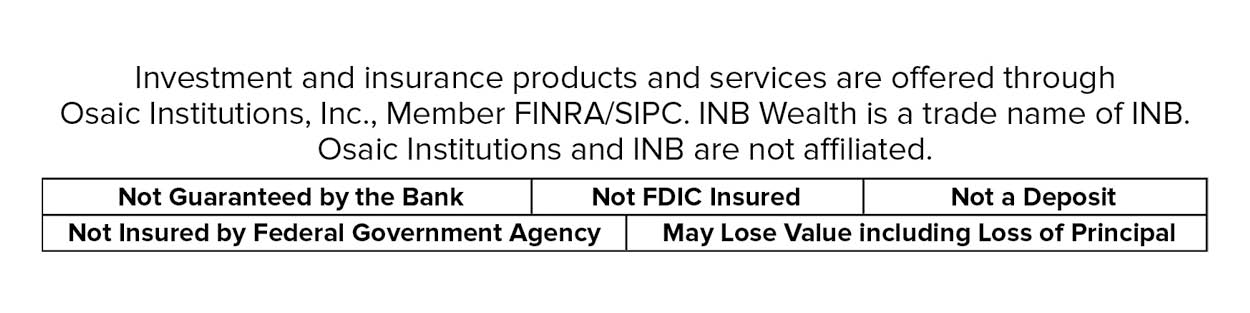
Investment Products: Some banks, like INB, offer access to investment products. We have a team of Osaic Institutions financial professionals who make it their job to know you and provide guidance on financial planning tailored to your goals. Make an appointment with these expert wealth advisors.
- Convenience. Traditional banks typically have extensive ATM networks, which are convenient for cash withdrawals and deposits. This is true of INB, which is part of the Money Pass Network, giving our customers 40,000 ATMS to use with an INB debit card free of surcharges.
“I think of banks in the way that I think about farming or a local utility cooperative: we may not always score high in the ‘cool’ category, but we are a foundational component to providing for a healthy and vibrant community,” Mark says.
Ready to get started with your local community bank? Contact INB today.